
This year the Air Force will complete evaluations of two rival unmanned jets for Increment 1 of its Collaborative Combat Aircraft (CCA) program—and award the winner a contract to build at least 100 of these unprecedented ‘drone fighters’ designed for air-to-air combat alongside manned warplanes.
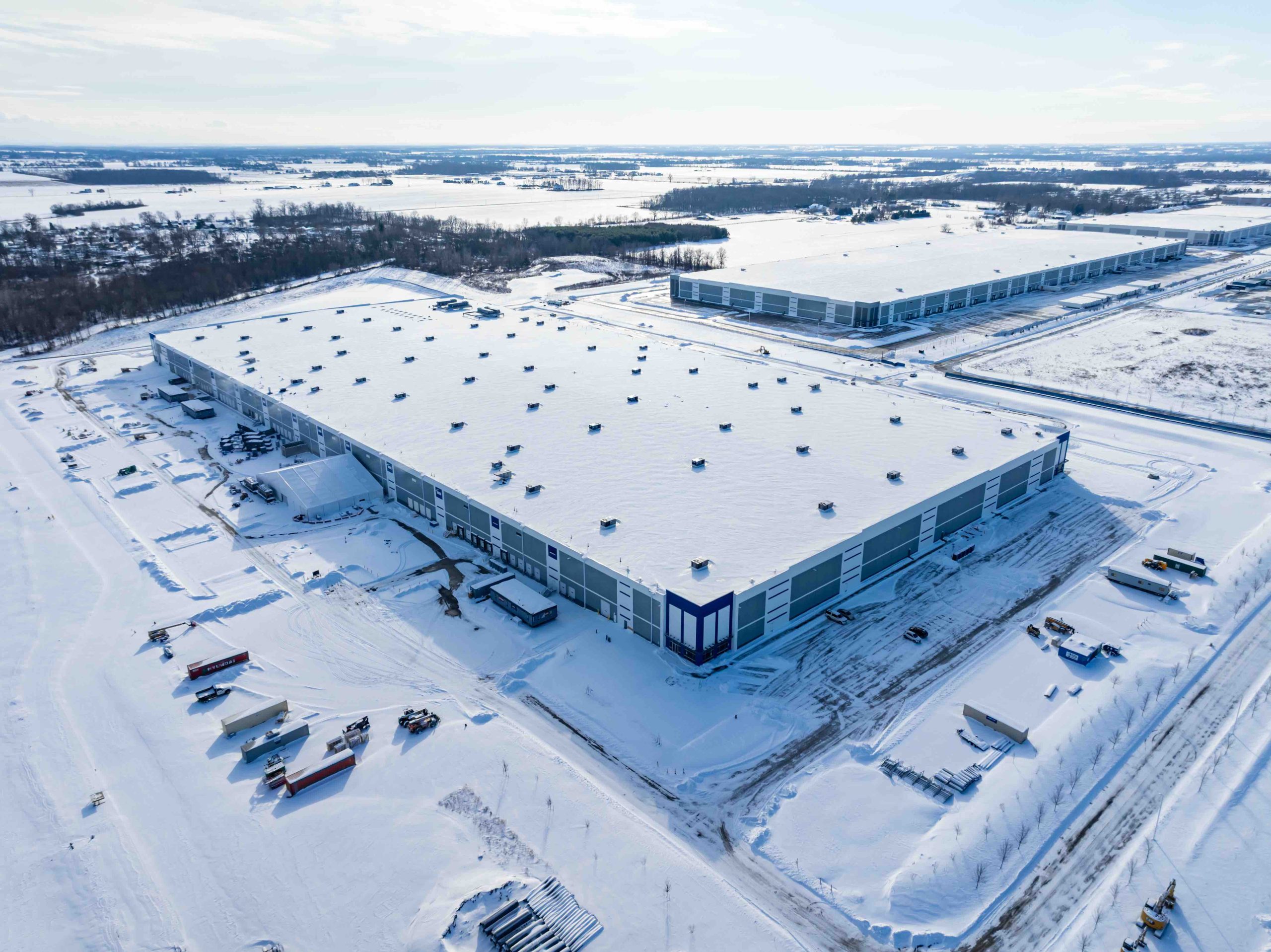
But well in advance of the Air Force decision, Silicon Valley defense giant Anduril announced this March it had just opened a production line with capacity to build up to 150 of its YFQ-44A Fury CCA drones annually.
Anduril’s new Arsenal-1 factory is located in Asheville, Ohio near Rickenbacker Airbase, just south of the state capital of Columbus. The March opening comes three months earlier than originally projected, staffed by 30 employees of the ‘Fury Launch Team’ that began training at Anduril’s California headquarters in summer 2025.
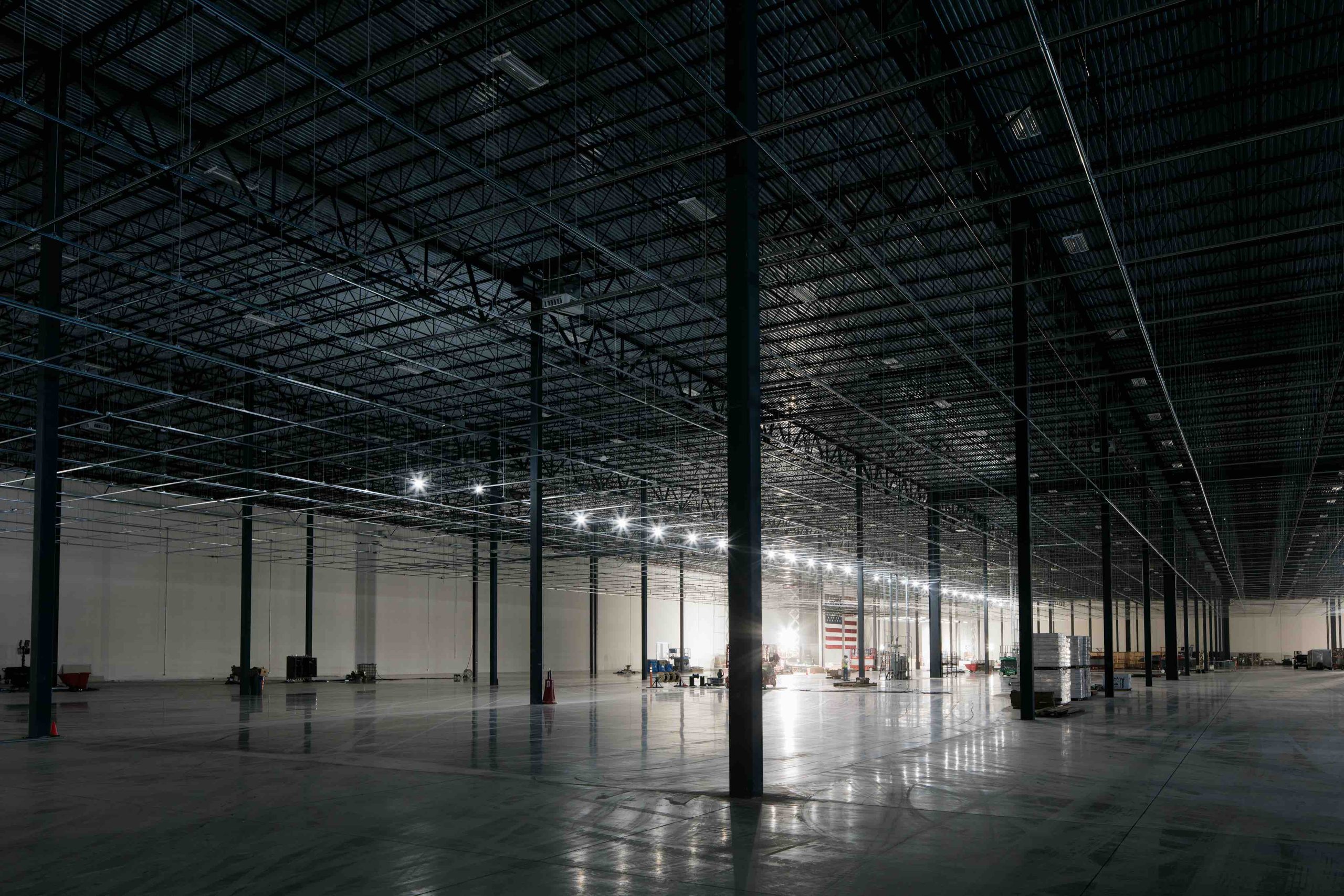
Its Building 1 will begin with producing Fury drones, a type which made its first flight October 31 last year. The building’s 836,000-square-foot floor is debuting with 22 workstations, though the company says it could expand production volume simply by adding more.
Anduril says it plans to on the facility and multiply staff eightfold to roughly 250 employees by the end of year. Then through 2035, it plans spend $1 billion opening six more manufacturing buildings (increasing square footage to 5 million square feet) and hiring up to 4,000 employees.
Already, Building 1 itself is planned to house additional production lines for Roadrunner jet-powered VTOL drone interceptors, the Barracuda family of low-cost cruise missiles, and a third classified project by the end of 2026.
“The line that we have today is able to produce up to 50 aircraft per shift. At three shifts per day, that means 150 aircraft per year,” Anduril told IUS, while stressing that maximum capacity isn’t the same as orders. Anduril said couldn’t disclose the number of additional Furies currently requested by Air Force beyond the initial two prototype.
Thus, the distinction between capacity and orders highlights the risks Anduril is taking by opening a production line now: what if the Air Force chooses to award the Increment 1 contract to General Atomics and its YFQ-42A Dark Merlin prototype rather than Anduril and its YFQ-44A? The competition also could potentially result in a split order including both companies, or even dark horse third parties.
Of course, opening the production line might boost the Anduril’s prospects for winning a production contract by reassuring the Air Force it has the facilities in place to execute rapid serial production. But should Fury not receive an Air Force order, Anduril could be left trying to recoup the production line’s cost by seeking foreign buyers.
Anduril might have in mind the example of the Kratos XQ-58 Valkyrie or Boeing MQ-28, neither of which were downselected by U.S. Air Force to compete for CCA Increment 1, but which nonetheless found buyers overseas in Australia and Germany respectively (as well as the U.S. Marine Corps in the case of the Valkyrie.)
“Anduril continues to engage with a number of allies and partners in close collaboration with the USAF CCA program,” a company spokesperson wrote IUS. Anduril appears to have already marketed Fury to Australia and Japan. There is also a partnership with German firm Rheinmetall unveiled last June, thought that would involve potential license production of a ‘continental’ Fury variant in Germany.
Anduril Fury in Brief
The Fury was originally developed by North Carolina’s Blue Force Technologies before that company was bought by Anduril in 2023 . Powered by a Willias FJ44-4M turbofan engine, Fury can attain transonic speeds (Mach .95) and a service ceiling of 50,000 feet, and can externally carry two long-range AIM-120 AMRAAM missiles—as seen in a photo of captive carry test in February.
On February 26th the company announced Fury had made its first semi-autonomous flight simulating future CONOPS using the Hivemind AI system developed by Shield AI—and then successfully re-ran the same mission using Anduril’s own proprietary Lattice Mission Autonomy system. This demonstrated the platform’s modular systems architecture supporting different autonomy solutions, and the Air Force’s overarching Autonomy Government Reference Architecture (A-GRA) interface.
The rival General Atomics YFQ-42A, however, also demonstrated its ability to switch between its Collins autonomy software and Hivemind that month; and that design’s stealthy internal weapons bay is viewed favorably, as is General Atomics’ record of delivering hundreds of Reaper and Predator combat drones over the last 30 years. Thus, Fury faces a formidable adversary in the battle for Air Force procurement dollars.
Air Force General Dale White has also indicated the service is deliberating internally whether to acquire more Increment 1 CCAs than the 100 originally planned, at the expense of a slower roll-out of Increment 2—potentially increasing the stakes for winning CCA Increment 1.
The Mass Production Chicken-and-the-Egg Problem
While Anduril has branded itself around the concept of delivering affordable mass using “hyperscale” production emphasizing simplicity and low-cost consumer parts, critics have questioned the firm’s ability to transition its broad catalogue of unmanned platforms and munitions into actual mass production at truly low unit costs. In this regard, Arsenal-1 will become a key test of Anduril’s ability to deliver on its rhetoric.
Of course, defense industry challengers face a chicken-and-egg problem: it’s hard to convince the Pentagon to pay for mass production without production capacity already standing. That may explain the move to establish a Fury production line in advance of the Air Force decision—one that may at least have risk mitigation due to the same facility being slated for three additional projects as mentioned above.
Anduril has already described various ways Fury was designed for simpler, lower-cost assembly, including use of the already mature FJ44 engine, simplified in-house landing gears, mechanical fasteners for assembly rather than bonding, and carbon fiber rather than aluminum surfaces.
Anduril has also shared some details to media of the 22-station workflow for Fury, which is initially moved from station to station by a custom-designed cart.
- Stations 1-4: initial structural assembly
- Stations 5-11: more complex and sensitive work including hydraulics, fuel, avionics
- Station 12-19: landing gears (subsequently used to move and support airframe), then wings and engine
- Stations 20-22: testing to verify system functions
Staff members will initially participate in every stage of assembly to familiarize themselves with the process top-to-bottom before specializing in one or two specific stations.
Reportedly, the line averages five days to advance an airframe up one station when staffed with one shift; or just one day and six hours when staffed with three shifts. That implies a total Fury production cycle duration ranging from 27.5 workdays with three shifts, or 110 with just one shift.
Contrary to expectation, Anduril aircraft production chief John Malone told media he incorporated relatively little automation into the production line—having concluded from prior experience that excessive automation at Tesla factories hampered productivity. Instead, the company plans to add some automation to specific tasks based on initial experiences, with likely automation candidates including painting, airframe transportation and sub-assembly.
Collaborative Combat Aircraft
CCAs, as their name implies, are designed primarily to support manned aircraft in combat by accompanying them into battle contributing additional missiles and/or sensors, and drawing away enemy fire from manned aircraft. Ideally, CCAs should eventually incorporate sufficient autonomy to execute ‘wingman’ commands issued by the manned aircraft they’re tethered to without requiring close supervision and much remote piloting, though kinetic attacks will still require human authorization.
The Air Force is still trying to formulate a concept of operations and doctrine for its future drone fighters. Generally, CCAs are hoped to bring attritable, affordable mass to complement the Air Force’s exquisite manned fighter fleet, helping counteract the quantitative disadvantage they might face in a hypothetical conflict with China. They may also help execute longer-range missions across the Pacific which pose challenges for the Air Force’s short-range F-16 and F-35 fighters.
For its first generation Increment 1 CCAs, the Air Force settled on a relatively conservative concept of air-to-air missile carriers projected to cost $25-30 million each. That price is roughly one-third or one-fourth that of a manned fighter, but still high enough to strain the definition ‘attritable’ compared to alternative concepts for cheaper, more expendable CCAs.
Future CCA increments might emphasize different or additional missions, with the service having already reached out to nine companies for proposals for Increment 2. The Air Force plans to eventually procure 1,000-2,000 CCAs all told with the service eyeing Beale Airbase (near Marysville, CA) to house a future CCA Readiness unit.